Pelangio Mines Inc.


Exploration of the Obuasi Property

We have been working on the Obuasi Property since its acquisition in spring 2006, but it was only in late 2008 that we obtained sufficient information to conduct extensive drilling on the Main Obuasi Trend. Our exploration on the property to date includes:
  • 2,038 metres of drilling in 2007;

  • 6,965 metres of drilling in 2008;

  • bulk leach extractable gold (BLEG) geochemical surveying throughout the property;

  • mobile metal ion (MMI) geochemical surveying on the Main Obuasi Trend;

  • versatile time electromagnetic (VTEM) airborne geophysical surveying in 2007 and 2009; and

  • mapping and prospecting.
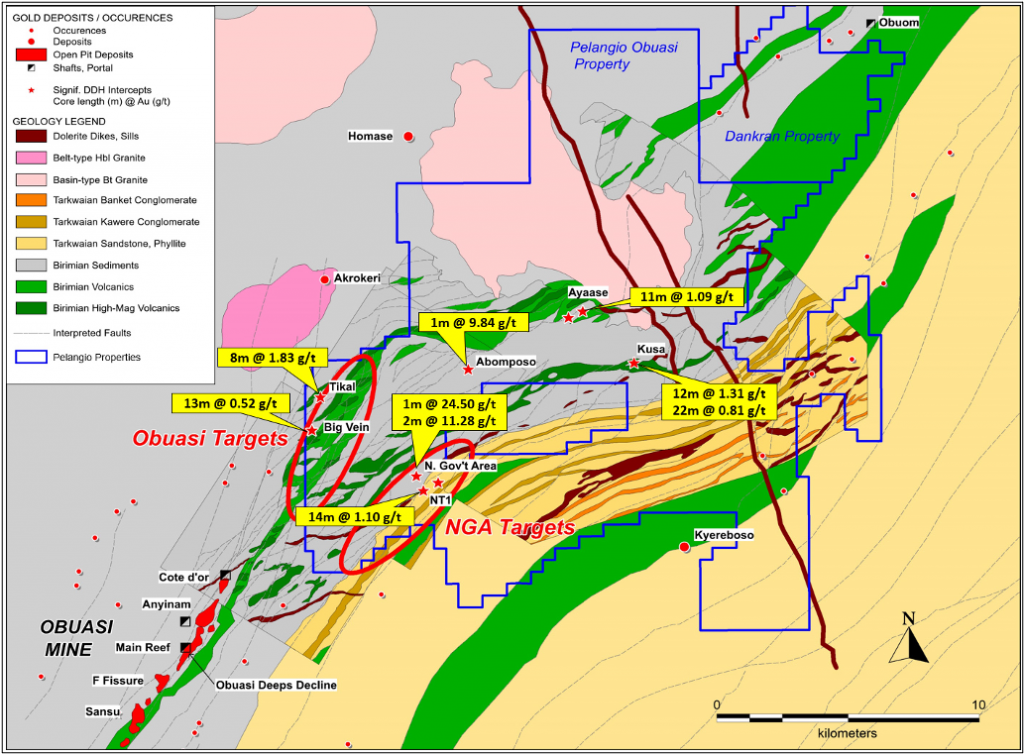
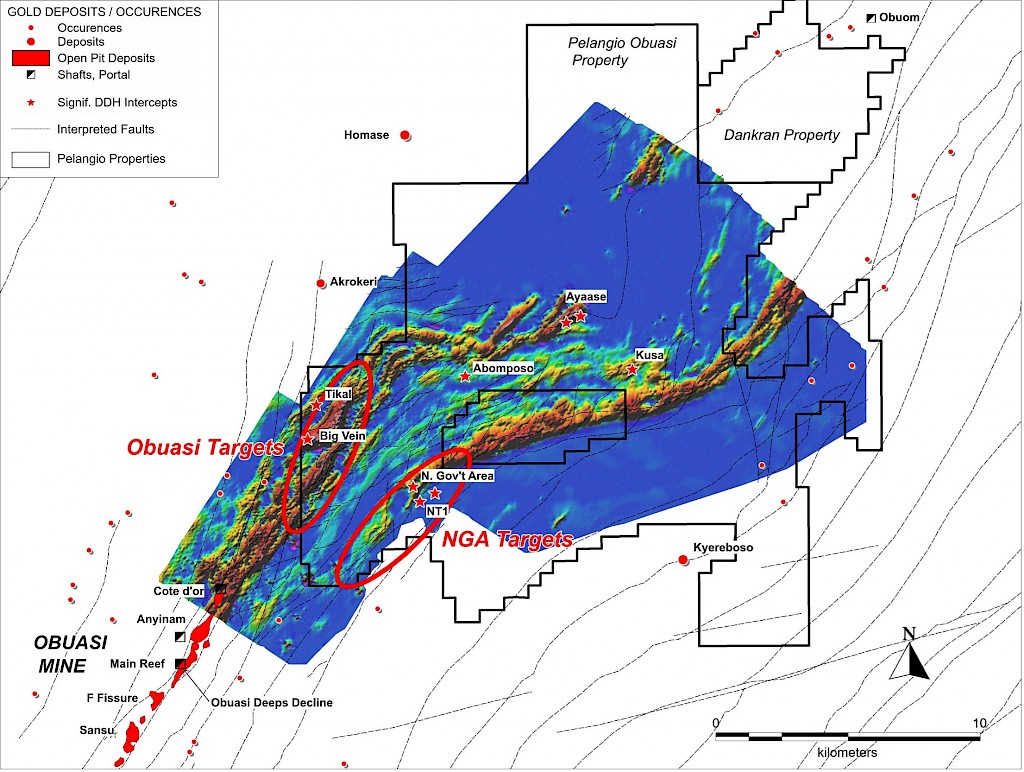
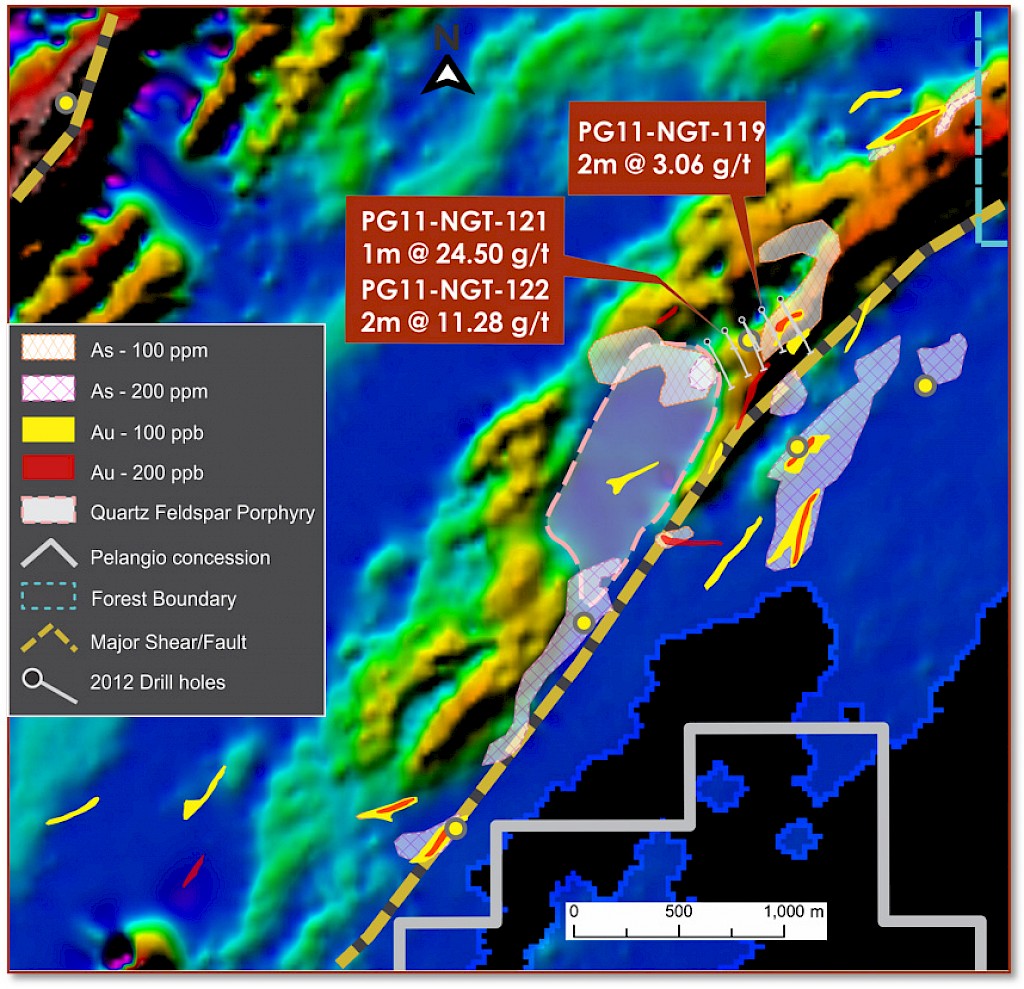
The ore shoots at the adjacent Obuasi Mine are hosted in graphitic shear zones and are spatially associated with a mafic volcanic horizon, generally occurring within 400 metres to the northwest of this horizon. We have used the VTEM surveys as a structural mapping tool to trace the fault structures at the Mine through at least approximately 15 kilometres of our property. Additionally, through prospecting and drilling, we have traced the mafic horizon through the western portion of our property. The faults and mafic horizon are important indicators of potential gold mineralization and will be used in conjunction with (primarily) MMI surveying to locate prospective drill targets during our late-2009-2010 drill program.


click to enlarge

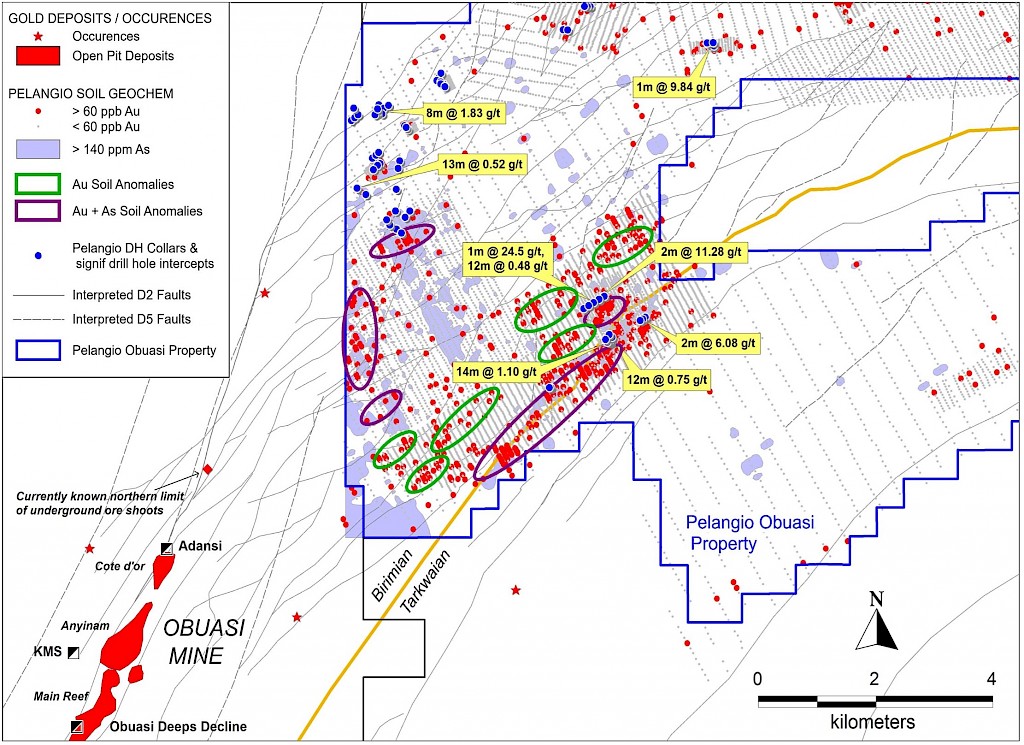
We are now relying primarily on MMI surveying as a geochemical tool, as we have concluded that it is more effective at seeing through cover than conventional techniques such as BLEG. The Obuasi Property is a "cover play" in that it is predominantly covered in between 5-20 metres of overburden, with very little outcropping. Additionally, due to the local topography, much of this overburden is subject to transport, which makes BLEG particularly ineffective in locating mineralization. MMI is a partial extraction technique that is significantly less affected by overburden transport.

We been working on 16 primary target areas on the three main trends traversing the project:

  1. Main Obuasi Trend;
  2. Gyabunsu Trend; and
  3. Central Trend.

click to enlarge

During 2009, we located 10 priority drill targets on the Main Obuasi Trend using geochemical, geophysical and prospecting information. Our independent structural consultants also referenced these targets, as well as noting four other structural targets of interest. In October 2009, we commenced a two-phase 30,000+ metre diamond drilling program, which will focus primarily on the Main Obuasi Trend and will continue until the end of 2010.


click to enlarge

The following target summaries reference previous work (2007-2009) on the primary target areas on the Obuasi Property and will be updated as further information from drilling, etc. becomes available.

1. Main Obuasi Trend

The Company conducted a regional MMI survey along the south central section of the Main Obuasi Trend, which identified large anomalies running northeast in excess of 2.5 kilometres along strike. These anomalies coincided with the results of the VTEM survey, with the strongest MMI survey signatures coinciding with the most highly conductive zones identified in the VTEM survey. Work in this area will focus on tracing the geometry and extent of the mafic volcanic horizon through prospecting and detailed mapping of the area. The mafic volcanic horizon is correlative with the footwall to the main ore zones at the Obuasi mine, and is in the hanging wall of the Gyabunsu Trend mineralization at Obuasi.


click to enlarge

Mount Kate Area

Pelangio drilled two holes at Mount Kate in the first quarter of 2008 based on encouraging trenching and MMI results. The drilling intersected near-surface mineralization, the best results of which were in holes AMK-08-01, which intersected 1.57 g/t gold over 1.0 metre, within a wider intercept of 0.3 g/t gold over 17.0 metres, and AMK-08-02, which intersected 1.24 g/t gold over 4.0 metres within a wider zone of 0.78 g/t gold over 9.0 metres. Significantly, both of these holes intersected structurally controlled mineralization at the fault contact between argillaceous sediments and mafic volcanics, which is a typical setting for mineralization at Obuasi.

The Company plans to drill beneath and along strike from mineralization at Mount Kate with an emphasis on testing mineralization below the weathered horizon, as the deep weathering at the target may have resulted in near-surface gold depletion.

Giant Python Target

The Giant Python target is situated along a parallel structure to the north of Mount Kate. The Company drilled two holes at this target based on positive MMI survey results. The best result was in hole AGP-08-01, which intersected 1.2 g/t gold over 2.0 metres.

Ridge Top Target

The Ridge Top target is located between the Giant Python and School House targets. The Company drilled two holes at this target based on positive MMI survey results. The best results were obtained in hole ART-08-01, which hit multiple anomalous low grade intersections, the best of which assayed 0.95 g/t gold over 1.0 metre. Further work is planned at this target, including prospecting and structural mapping.

School House Target

The School House target is located 0.5 kilometres northwest of the Giant Python target on a parallel structure forming part of the Main Obuasi Trend. Pelangio drilled three holes totaling 651 metres at the target and intercepted mineralization in two of three holes, the best of which assayed 1.2 g/t gold over 1.0 metre in hole ASW-08-03.

East Copper and West Copper Targets

The East and West Copper Targets are located approximately one kilometre apart along strike to the north of the School House target. The Company drilled nine holes during 2008 totaling 2,393 metres at East and West Copper (four holes and five holes, respectively) based on encouraging MMI survey results and a VLF (very low frequency) survey. East and West Copper are located on the same structure as the School House target and are part of the Main Obuasi Trend. The best results from these targets were obtained in holes AEC-08-3b and AEC-08-04, which intersected 0.8g/t gold over 2.0 metres and 3.4 g/t gold over 2.0 metres, respectively. Further work will include testing beneath and along strike from AEC-08-04.

Old Akrofuom Target
Old Akrofuom Area
<< Previous | Play/Stop | Next >>


Picture:   of  


This target lies about six kilometres northeast of the boundary of Anglogold Ashanti's Obuasi property. During the 2007/2008 field program, the Company conducted prospecting throughout the area as well as preparing detailed mapping of the quartz vein outcroppings at surface. The Company also collected rock chips from the drilling of water wells throughout the area, which we hope will provide further insight into the nature of the gold occurrences. A detailed BLEG survey on a 100 metre by 50 metre grid is planned for the area, and potentially an augering program to follow up on any promising results obtained from the geochemistry survey.

2. Gyabunsu Trend

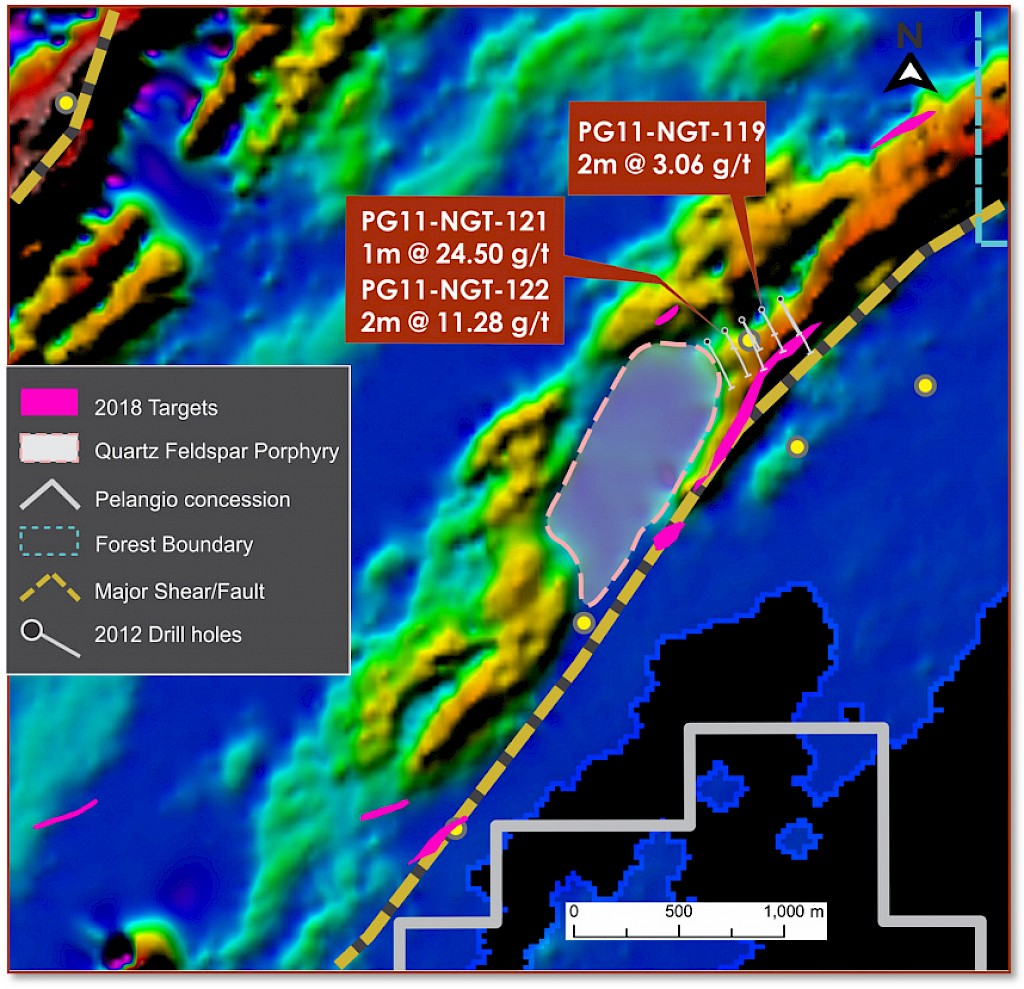
The Company has discovered a number of anomalies along the Gyabunsu Trend, most significant being the New Trench 1 and the New Trench 3 ("NT 1" and "NT 3") targets. Other targets include the Kusa, Dinkyie South and Dinkyie North targets. The southern part of the trend was included in the VTEM survey, which has provided the Company with further insight into the nature of the targets on the trend, particularly around NT1, NT2 and NT3.

NT1, NT2 and NT3 Targets

During the 2007 exploration program, Pelangio completed three drill holes at the NT 1 area located on the Gyabunsu trend. The holes, drilled on 25 metres intervals, tested the anomalous trench results obtained in NT 1 and Randgold Trench 10. Hole PG07NT1-3 intersected 1.10 g/t gold over 13.95 metres under three metres of overburden. Gold mineralization is associated with silicified and veined Tarkwaian sandstones above the Birimian argillites. The orientation of mineralization remains uncertain.

During the 2008 field program an old adit was identified in Mampawhe to the north of the New Trench 3 target. According to local inhabitants, this adit was previously mined before being abandoned. The Company plans to prospect in the area of this adit. The Company plans a detailed soil geochemistry program in this area, while further soil geochemistry at a coarser grid and prospecting are planned to follow another geochemical trend 500 metres to the north.

New Trench 3 target is approximately 1.3 kilometres southwest of NT 1. Two drill holes intersected anomalous gold values in four trenches. Hole PG07NT3-2 intersected 5.85 g/t gold over 1.0 metre. No further work is planned for this target in the immediate future.

Abomposo Target

The VTEM survey indicates that the Abomposo target is situated along a splay of the Main Obuasi Trend. Randgold obtained its best trenching results at the Abomposo target. A duplication of Randgold Trench 15, which encountered 1.25 g/t gold over 23.0 metres, returned 1.93 g/t gold over 17.0 metres within a larger halo of 1.08 g/t gold over 40 metres. The mineralized interval is hosted in graphitic schist (one of the main host rocks at the Obuasi mine) containing a high percentage of small quartz veinlets. Other trenches returned 1.03 g/t gold over 9.0 metres, 1.02 g/t gold over 6.0 metres, and 1.77 g/t gold over 3.0 metres.

Gold mineralization on the Abomposo target is hosted by quartz carbonate veins in sheared argillite. The gold mineralized zone has been defined by trenching over a distance of 450 metres along an east-southeast trend (110° azimuth) plunging 10° to 20° to the west.

Pelangio drilled seven holes totaling 753 metres to test the extension of Trench 15 during the 2007 exploration program. The best results were in holes PG07-AB-3, which intersected 9.84 g/t gold over 1.0 metre (11 metres from surface), and PG07-AB-4, which intersected 4.23 g/t gold over 1.0 metre (10 metres from surface). These holes are located 25 metres and 50 metres west of Trench 15, respectively.


click to enlarge

No further work is planned for this target in the immediate future.

Kusa Centracor Target

The Kusa Centracor target is located 6.3 kilometres east of Trench 15 at Abomposo. The anomalous gold zone was defined over a strike length of 250 metres by trenching and seven holes drilled by Centracor Mining Ltd in 1993. Six drill holes were completed over a strike length of 125 metres, within 120 metres west of the past drilling area.

The mineralized zone lies within a sheared silicified and pyritic felsic intrusive with 1-5% pyrite in contact with graphitic phyllites to the south. The best gold intercepts were in holes PG07-KU-1 and PG07-KU-4, which assayed 1.08 g/t gold over 12.0 metres and 1.29 g/t gold over 12.0 metres, respectively, both within the intrusive rocks and 80 metres apart.

Holes PG07KU-4 and PGKU07-5 were stopped before they reached the contact with the graphitic phyllites and may have missed some mineralized zones. The zone remains open to the west and east.


click to enlarge

The Randgold exploration program identified a gold geochemical target east of Kusa Centracor within the Tarkwaian sediments outcropping in the area. This target, referred to as Big Bend, will be examined during our 2009-2010 drill program.

Dinkyie South Target

The Dinkyie South target was identified by a soil geochemistry anomaly from historical Randgold data. The Company has conducted prospecting and trenching at the target. The best trench result was in Trench Dinkyie 19, which intersected 0.54 g/t gold over 13.0 metres.

Dinkyie North

Dinkyie North is approximately 2.0 kilometres north of Dinkyie South and was also reviewed based on anomalous gold results in historical Randgold soil geochemistry data. A detailed MMI survey was conducted over this area and returned anomalous results in three areas. The Company is exploring these three anomalies with auguring and will conduct further soil geochemistry surveys, as one of the anomalies remains open and untested to the southeast.

3. Central Trend

Pelangio has identified two main targets along the Central Trend: the Brofoyedru South and Brofoyedru East targets. These targets are located along strike from the Chireboso deposit, which is located approximately 6.0 kilometres to the southeast of the Brofoyedru South target. The Brofoyedru North target lies approximately 4.0 kilometres northeast of Brofoyedru South. Both of these targets were drilled during the first quarter of 2008, with the best results intersected in hole BE-08-02, which had multiple intersections of 2.0 metres of 1.6 g/t gold, 4.0 metres of 0.51 g/t gold and 1.0 metre of 3.39 g/t gold, and holes BSD-08-01, BSD-08-06 and BSD-08-08, which intersected 1.0 metre of 0.9 g/t gold, 1.0 metre of 3.4 g/t gold and 2.0 metres of 0.9 g/t gold, respectively. The Company plans to implement a surface program, including prospecting and mapping, to trace the Central Trend structure between Brofoyedru South and Brofoyedru East, and to determine the extent of mineralization along the Central Trend and its relation to the Chireboso deposit.

  About Us |  Projects |  News |  Investors |  Contact |  QwikReport

© Pelangio Exploration Inc.